The
Football
Scale

If the Earth were a football - a standard size 5 ball measuring 22 cm  across - how big would everything else be, and how far away?
Scaled sizes

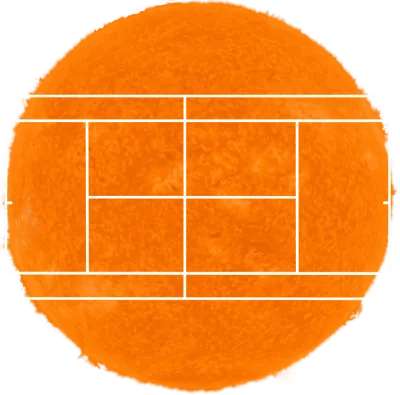
The Sun

A tennis court lengthThe Sun with a tennis court superimposed on it.
24 mSun at this scale
23.77 mTennis court
Almost exact match

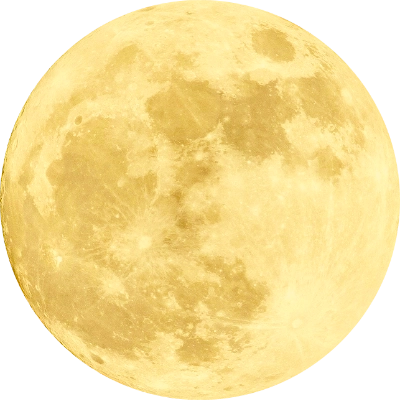
The Moon

An American pool ball
The Moon at scale.
6 cmMoon at this scale
5.715 cmPool ball
Very close match
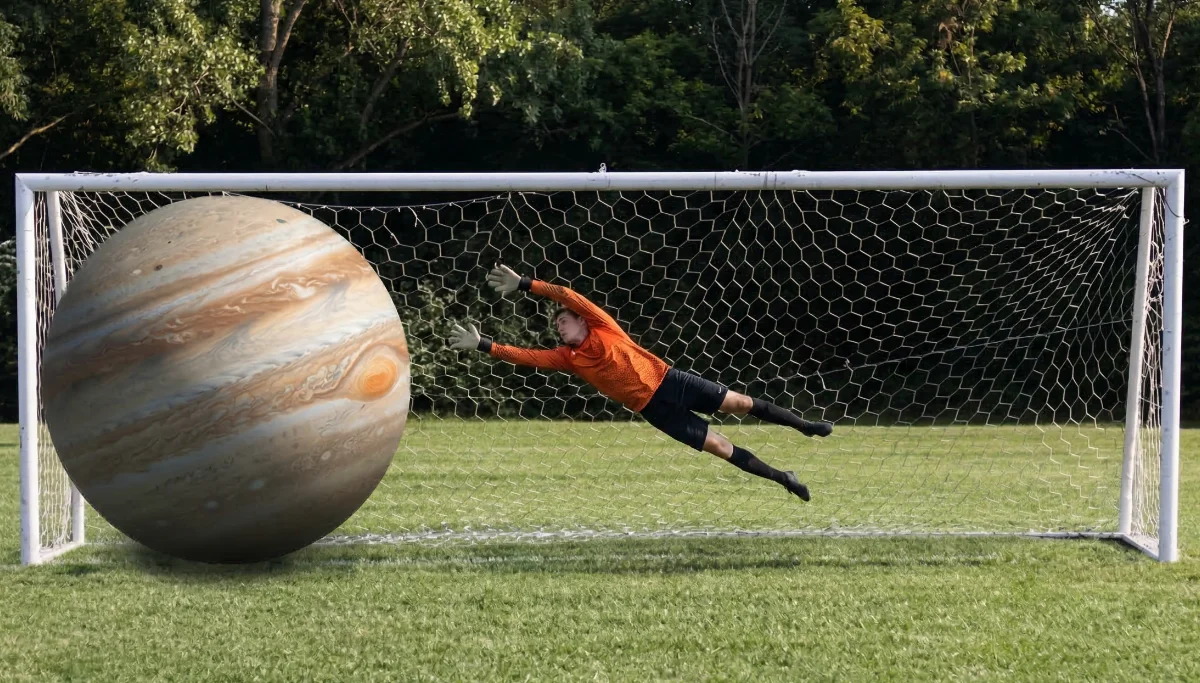
Jupiter in a football goal, with a goalkeeper diving towards it.

Jupiter

Almost the height of a football goal
2.41 mJupiter at this scale
2.44 mFootball goal
Almost exact match

Venus

A size 4 football
Venus at scale.
20.9 cmVenus at this scale
21 cmSize 4 football
Almost exact match

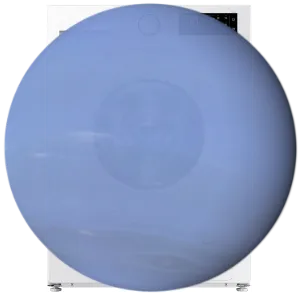
Neptune

The height of a washing machineNeptune superimposed on a washing machine.
85 cmNeptune at this scale
85 cmWashing machine
Exact match
SaturnHeight of a doorway
Doorway
UranusSnooker table height
Snooker table
MarsA lawn bowl
Lawn bowl
MercuryA large orange
Large orange
Composite image of the football scale

You've seen the sizes.

Now: how far apart?

Scaled distances

The Moon to Earth

The average distance is 6.64 m centre to centre.The live distance is loading.

Earth and Moon at football scaleAt this scale Earth is a 22 centimetre football and the Moon is about 6 centimetres wide. Their centre-to-centre distance is 6.64 metres.EarthMoonEarth and Moon scaled inside a football goalAt this scale Earth is a 22 centimetre football and the Moon is about 6 centimetres wide. The average centre-to-centre distance is 6.64 metres.6.64 m centre to centreEarthMoon

A full-size football goal is 7.32 m wide, so the Moon sits just inside the far post.
A double-decker bus is about 6.5-7 m long.

A full-size football goal is 7.32 m wide, so the Moon sits just inside the far post.

The inner planets — all within walking distance.

Measured from the Sun, with Earth as a football.

  • Mercury1.0 kmA 12-minute walk0.4 AU
  • Venus1.87 kmA 22-minute walk0.7 AU
  • Earth2.58 kmA 30-minute walk1.0 AU
  • Mars3.94 kmA 47-minute walk1.5 AU

Then there's a gap.

The inner planets are bunched together — all within a 47-minute walk. Then nothing, for kilometres. That gap is where the asteroid belt sits.

The outer planets — a much longer walk (or ride).

  • Jupiter

    13.4 km / 8.3 milesA longer walk5.2 AU
  • Saturn

    24.6 km / 15.3 milesA long bike ride9.6 AU
  • Uranus

    49.6 km / 30.8 milesFor serious cyclists.19.2 AU
  • Neptune

    77.7 km / 48.3 milesRoughly an hour's drive.30.0 AU

From Washington, D.C., on a map

Put the Sun in Washington, D.C., and the outer planets begin to land on real places.

Saturn

25.8 km
Sun: Washington, D.C.Saturn: Lorton

Uranus

47.6 km
Sun: Washington, D.C.Uranus: Glen Burnie

Neptune

77.0 km
Sun: Washington, D.C.Neptune: Perry Hall

Remember this

The Football.

The Tennis Court.

The 30-minute walk.

The drive to Neptune.

Hold onto it.